




SEO for ChatGPT: Getting Your Brand Into AI Answers
You search your own brand category in ChatGPT. Your company does not appear. Your competitors do. This happens despite strong Google rankings and a solid content library.
ChatGPT and similar AI assistants now influence purchasing decisions at scale. If your brand is missing from these conversations, you are losing deals before your sales team ever gets involved.
What Most Brands Get Wrong About ChatGPT Visibility
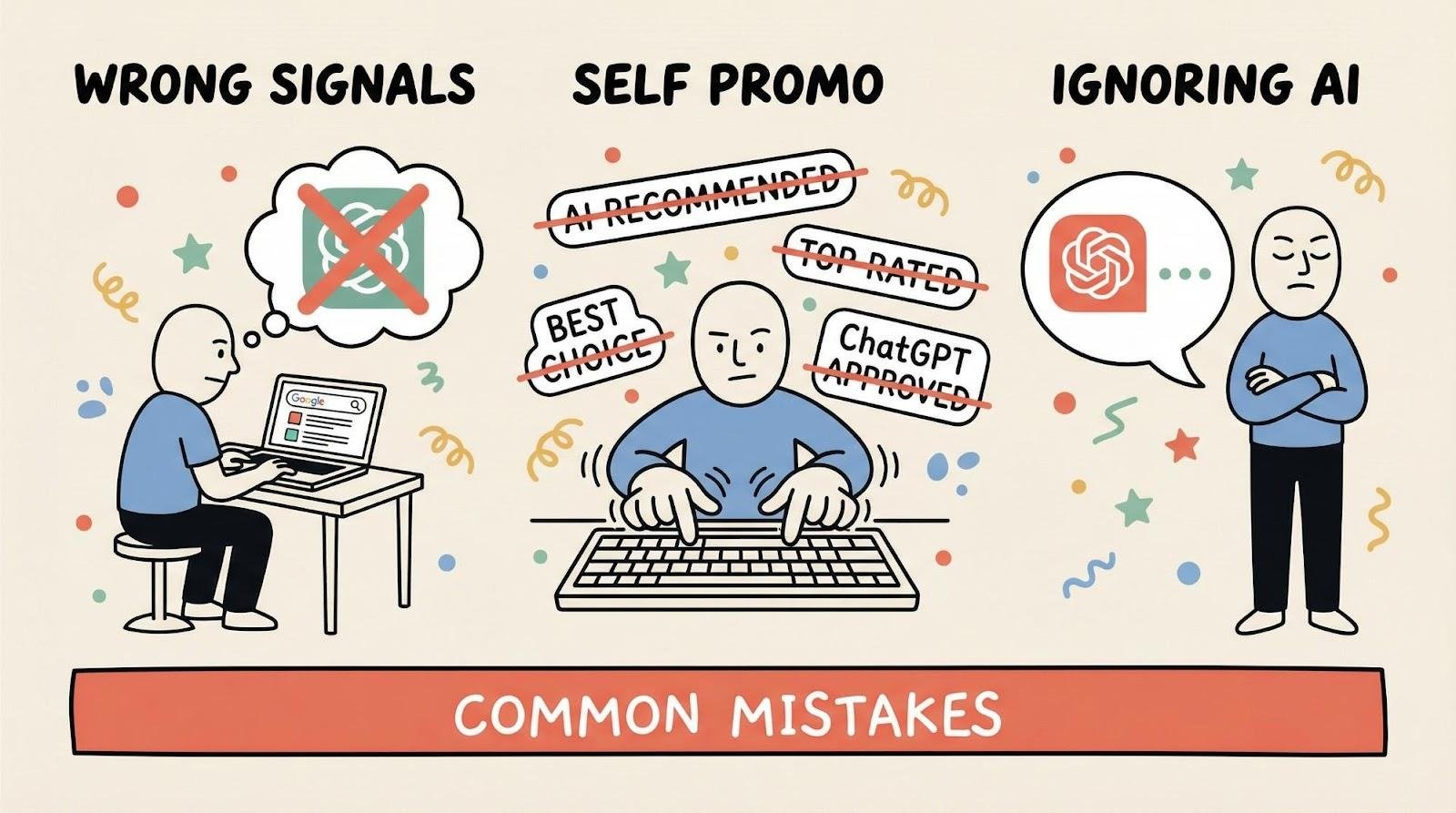
Marketing teams assume their Google SEO efforts automatically translate to ChatGPT visibility. This is incorrect. ChatGPT pulls from a different set of signals and a different knowledge base than Google Search.
Some teams try to game the system by stuffing their website with phrases like “recommended by AI” or “top-rated by ChatGPT.” This does nothing. ChatGPT does not read your self-promotional claims. It synthesizes information from authoritative external sources.
Others ignore ChatGPT entirely, dismissing it as a novelty. Meanwhile, their prospects use it daily for vendor research, product comparisons, and buying decisions.
If you are not visible in AI answers, you are invisible to a growing segment of your buyers.
What Your Brand Needs to Appear in ChatGPT Answers
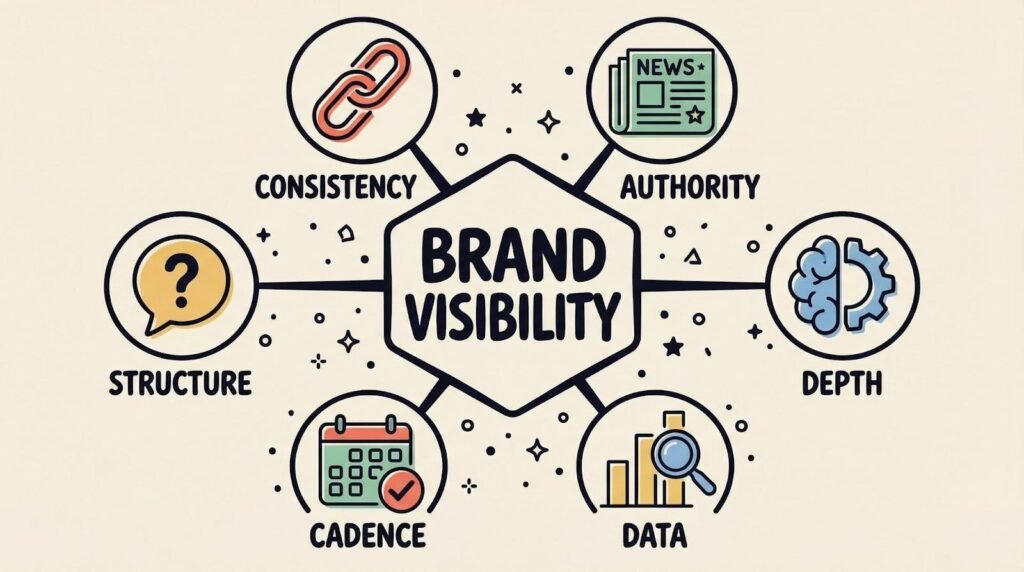
Consistent Brand Information Across the Web
ChatGPT builds its understanding of your brand from multiple sources. If your company description varies across your website, LinkedIn, Crunchbase, and industry directories, the model cannot form a clear picture. Standardize everything.
Presence in Authoritative Third-Party Content
ChatGPT trusts established publications, review sites, and industry analyses over your own marketing materials. Your brand needs to appear in content you do not control. Guest articles, analyst mentions, and comparison roundups carry real weight.
Structured Content That Answers Specific Questions
ChatGPT generates answers to specific user queries. Your content must directly address the questions your audience asks. Use clear headers, concise definitions, and explicit answers within the first few sentences of each section. Brands committed to ai search optimization build their entire content architecture around query-response patterns.
Technical Credibility and Depth
Shallow content does not earn ChatGPT citations. Demonstrate genuine expertise through detailed explanations, real data points, and specific methodologies. ChatGPT favors sources that show deep understanding over those that skim the surface.
Active Publishing Cadence
ChatGPT’s retrieval systems favor recent content. A blog that published its last post six months ago signals a stale source. Maintain a regular cadence of substantive content to stay within the model’s active consideration set.
Attribution-Ready Data and Research
ChatGPT cites sources that make specific, verifiable claims. Publish original statistics, survey results, benchmark data, and case studies with concrete numbers. Models prefer citing primary research over secondhand summaries.
Practical Steps to Get Your Brand Into ChatGPT Answers
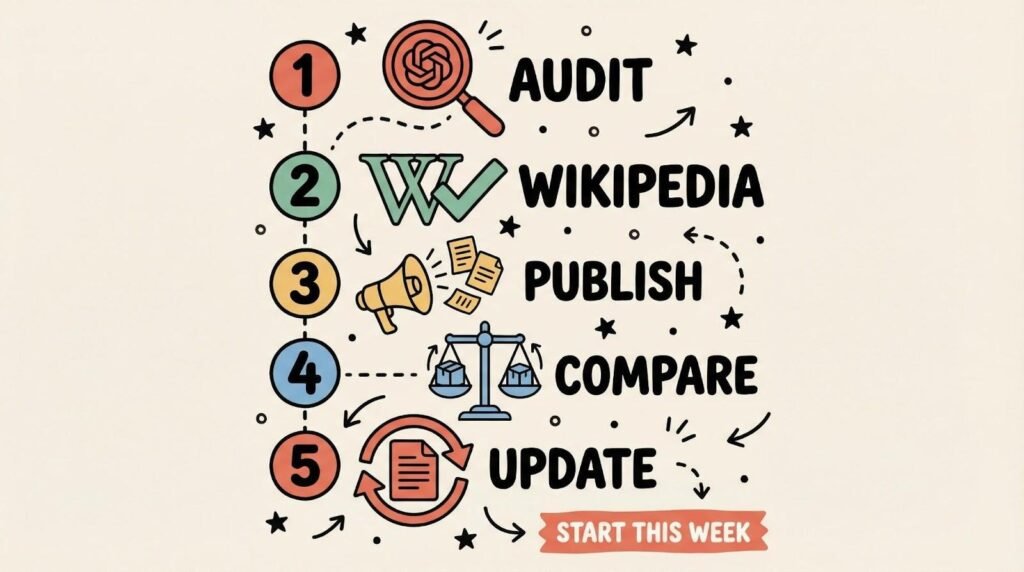
Run a ChatGPT visibility audit. Test 20 to 30 queries that your ideal customers would ask. Include product category queries, comparison queries, and problem-solution queries. Document which brands appear and which sources ChatGPT references.
Create a Wikipedia presence if you lack one. Wikipedia is a primary knowledge source for AI models. If your company or product has a Wikipedia page, ensure it is accurate and current. If it does not, assess whether your brand meets notability criteria and pursue a page.
Publish on high-authority external platforms. Contribute articles to industry publications like TechCrunch, HBR, or vertical-specific outlets. Each authoritative mention builds the cross-reference pattern that ChatGPT uses to validate recommendations.
Build comparison content on your own site. Create detailed, honest comparison pages between your product and alternatives. ChatGPT frequently pulls from comparison content when users ask “what is the best” or “compare X versus Y.” Effective ai search optimization includes owning the comparison narrative with transparent, data-backed analysis.
Update your knowledge base monthly. Refresh your core content pages with current data, new examples, and updated recommendations. Stale content drops out of retrieval windows. Fresh content signals ongoing authority.
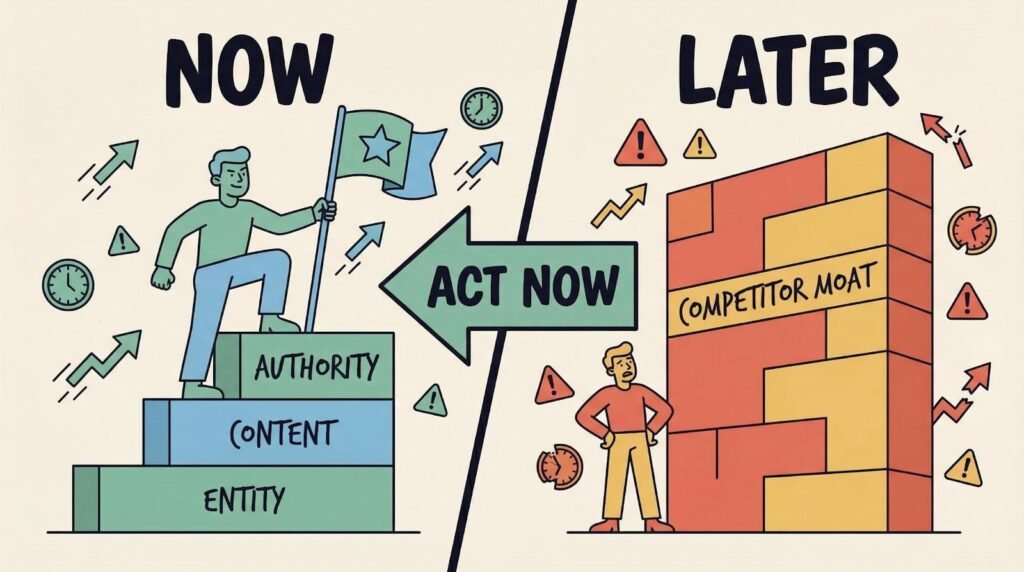
Every Week You Wait, Competitors Gain Ground
ChatGPT usage for product research grows every quarter. The brands establishing themselves in AI answers now are building a compounding advantage that becomes harder to displace over time.
Your competitors who appear in ChatGPT today did not get there overnight. They invested in entity optimization, third-party authority, and structured content months ago. The results they enjoy now reflect decisions made earlier.
The cost of inaction is not standing still. It is falling behind while competitors claim the AI recommendation space in your category. Brand associations in AI models become entrenched as more training data reinforces them.
Start building your ChatGPT presence this week. The alternative is watching your market share erode through a channel you chose to ignore.