



Best Portable Power Station for Home Emergency Backup: A Comprehensive Buyer’s Guide
When severe weather strikes, losing electricity can quickly turn an ordinary day into a difficult situation. Hurricanes, thunderstorms, wildfires, winter storms, and grid failures can interrupt essential household systems for hours or even days. Having reliable backup power can keep important devices running, provide lighting, preserve communication, and make an emergency much easier to manage. For many households, a portable power station offers a convenient alternative to traditional fuel-powered generators.
Choosing the best generator for hurricane season does not always mean selecting the largest or most powerful fuel generator. A modern portable power station can provide clean, quiet, and rechargeable electricity without gasoline, exhaust fumes, or complicated maintenance. However, models vary significantly in battery capacity, output, charging speed, ports, safety features, and expandability. Understanding these differences is essential before making a purchase.
What Is a Portable Power Station?
A portable power station is essentially a rechargeable battery system equipped with an inverter and multiple output ports. It stores electricity and delivers it to household electronics when utility power is unavailable. Depending on the model, users can recharge the battery from a wall outlet, solar panels, a vehicle, or other compatible charging sources.
Unlike conventional gas generators, portable power stations produce electricity without combustion. This makes them suitable for indoor use when operated according to the manufacturer’s instructions and safety requirements. They are also significantly quieter, making them useful during nighttime outages.
The right model can power devices such as smartphones, laptops, Wi-Fi routers, LED lights, televisions, fans, medical equipment, refrigerators, and other essential appliances.
Determine Your Emergency Power Requirements
The first step in choosing the right power station is determining what you actually need to operate during an outage. Creating a list of essential appliances prevents you from purchasing either an underpowered or unnecessarily expensive system.
Small electronics such as phones, tablets, routers, and LED lamps require relatively little electricity. A compact power station may therefore be sufficient for basic emergency communication and lighting.
Larger appliances require considerably more energy. Refrigerators, freezers, space heaters, coffee makers, microwaves, and portable air conditioners can consume hundreds or thousands of watts. If you want to operate these appliances, look for a power station with sufficient continuous and peak output.
Battery capacity is generally measured in watt-hours (Wh). A larger watt-hour rating means the battery can store more energy. For example, a 1,000Wh power station theoretically provides 1,000 watts for one hour, although real-world runtime is lower because of inverter losses and other factors.
Consider Continuous and Surge Output
Battery capacity is only one part of the equation. You should also examine the inverter’s continuous output and surge capacity.
Continuous output indicates how much power the unit can deliver consistently. Surge or peak output indicates how much additional power it can briefly provide when appliances with electric motors start.
A refrigerator, for instance, may consume relatively modest power while operating but require a temporary surge when its compressor starts. If the power station cannot handle that surge, the appliance may fail to start.
For emergency backup, select a model whose continuous and peak ratings comfortably exceed the requirements of your most demanding essential appliance.
Battery Chemistry Matters
Battery chemistry affects lifespan, safety, weight, and overall value. Many modern portable power stations use lithium-ion technology, with lithium iron phosphate (LiFePO4) batteries becoming increasingly popular for backup applications.
LiFePO4 batteries are valued for their long cycle life and strong thermal stability. They can be particularly attractive for homeowners who expect to recharge and use their power station frequently rather than keeping it solely for rare emergencies.
Traditional lithium-ion batteries can still offer excellent performance, especially where lower weight and compact dimensions are priorities. Compare the manufacturer’s stated cycle life, warranty, charging specifications, and safety systems rather than choosing solely based on battery chemistry.
Look for Multiple Charging Options
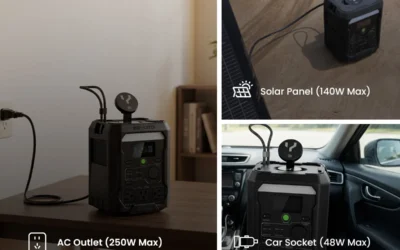
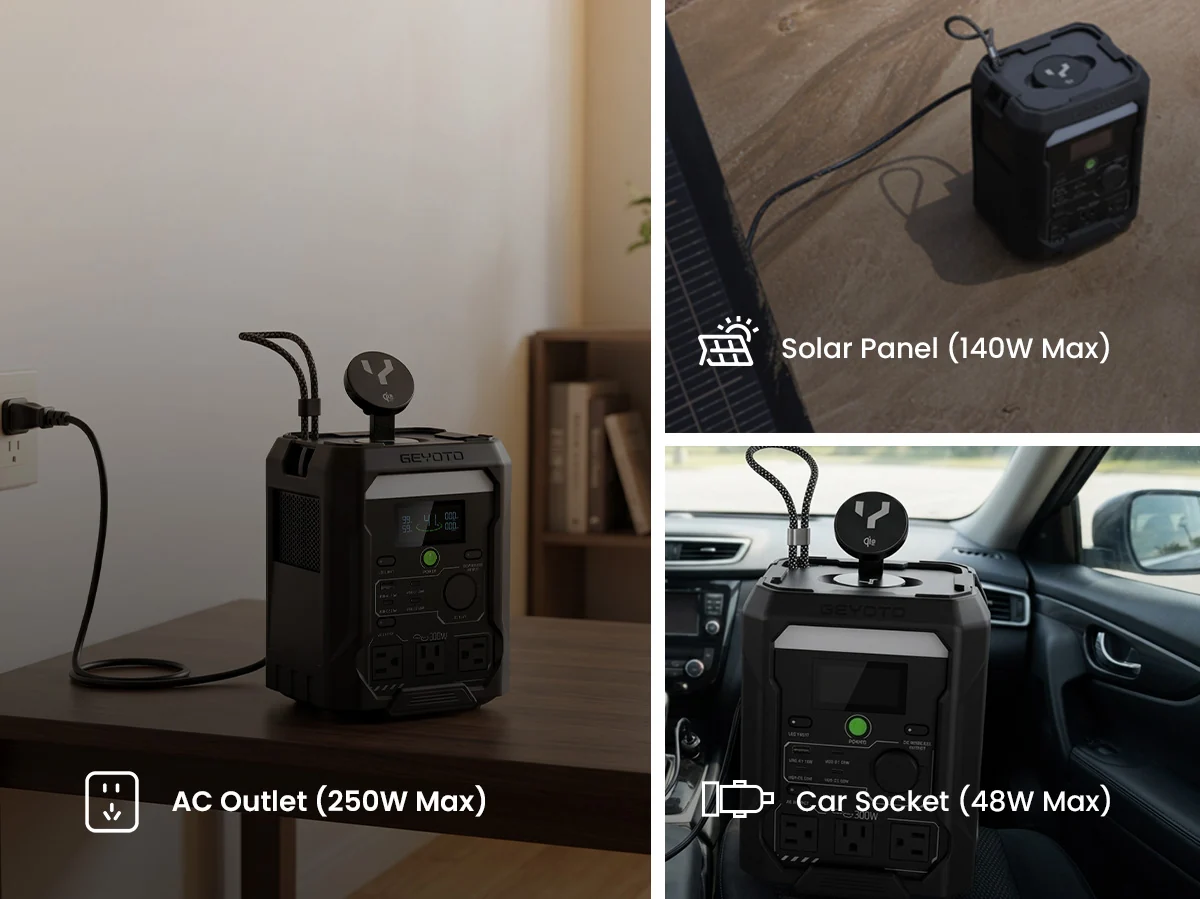
A dependable emergency power station should offer more than one way to recharge. Wall charging is typically the fastest and most convenient option when utility electricity is available. However, that option becomes unavailable during a prolonged outage.
Solar charging can provide an independent energy source when sunlight is available. A compatible solar panel can gradually replenish the battery during the day, allowing the system to function as part of a longer-term emergency setup.
Vehicle charging is another useful backup option. If your vehicle has sufficient fuel and a suitable charging connection, it may provide another way to restore battery capacity when the grid remains unavailable.
For hurricane preparation, multiple charging options are especially valuable because storms can cause extended power failures and make fuel supplies difficult to access.
Solar Charging for Longer Outages
A portable power station paired with solar panels can become much more useful during extended emergencies. Instead of treating the battery as a one-time source of electricity, solar charging allows you to replenish some of the energy consumed each day.
When comparing solar-compatible models, check the maximum solar input, supported voltage range, connector type, and recommended panel configuration. A larger solar input rating can reduce charging time when weather conditions are favorable.
Keep in mind that cloudy skies, shading, panel orientation, and seasonal sunlight can significantly affect solar production. Solar should therefore be viewed as a valuable backup charging method rather than a guarantee of continuous maximum output.
Essential Ports and Connectivity
The number and type of ports can make a major difference in everyday usefulness. Look for a combination of AC outlets, USB-A ports, USB-C ports, and 12V DC outputs based on the devices you expect to use.
USB-C ports are particularly useful for newer smartphones, tablets, laptops, and other electronics. AC outlets allow you to operate standard household equipment, while DC outputs can support compatible automotive or camping devices.
Some advanced power stations also include wireless connectivity and smartphone applications. These features can allow users to monitor battery levels, adjust settings, review power consumption, and receive system information remotely.
Portability and Design
Although a larger battery generally provides more energy, it also increases weight. Think about where you will store and use the power station.
A compact unit may be easy to move between rooms or transport in a vehicle. Larger systems may include wheels, telescoping handles, or other features that make them easier to relocate.
For emergency preparedness, choose a design that household members can realistically move when necessary. A massive power station may have impressive specifications, but its usefulness can be limited if it is difficult to transport.
Safety Features to Prioritize
Safety should always be considered when selecting backup power equipment. Look for systems that include protection against overcharging, overheating, short circuits, overloading, and excessive battery discharge.
A reliable battery management system helps monitor battery performance and can contribute to safer operation and longer battery life. Follow the manufacturer’s instructions regarding ventilation, operating temperatures, charging, storage, and connected appliances.
It is also important to understand that not every appliance should automatically be connected to a portable power station. Check power requirements carefully, particularly for high-wattage heating equipment.
How to Choose the Right Capacity
There is no universal battery size that qualifies as the best choice for every home. Your ideal capacity depends on the duration of the outage and the devices you need to operate.
For short outages, a smaller unit may handle communication devices, lights, routers, and laptops. For overnight or longer outages, a mid-sized system can provide additional flexibility.
Households wanting to operate refrigerators and several essential appliances may benefit from a larger-capacity power station or an expandable battery system. Expandable systems allow additional battery capacity to be added later, potentially making them more practical for serious emergency preparedness.
Preparing for Hurricane Season
If you are specifically searching for the best generator for hurricane season, preparation should begin well before a storm approaches. Charge your power station fully, test all charging cables, inspect compatible solar panels, and make a list of essential devices.
Store the equipment in an accessible location away from excessive heat and moisture. Keep phones, charging cables, lights, and other emergency supplies organized so they can be found quickly during an outage.
It is also wise to test your backup setup periodically. Knowing how much energy your refrigerator, router, lights, or other equipment actually consumes will make it easier to estimate how long your battery can last.
Final Buying Checklist
Before purchasing a portable power station, compare battery capacity, continuous output, surge output, battery chemistry, charging speed, solar input, available ports, portability, safety systems, warranty coverage, and expandability.
The best portable power station for home emergency backup is ultimately the one that matches your household’s actual electricity needs. A smaller system may be perfect for essential electronics, while a larger expandable model may be better for refrigerators and multiple appliances.
By calculating your power requirements in advance and choosing a system with reliable charging options, adequate capacity, and appropriate safety features, you can create a practical backup solution. Whether you’re preparing for hurricanes, winter storms, wildfires, or unexpected grid failures, dependable stored power can provide valuable convenience and peace of mind when normal electricity is unavailable.