





Unveiling the Secrets of the Gelatin Trick Recipe for Impressive Treats
In the world of confectionery and home baking, there is a fine line between a dessert that is merely tasty and one that stops the show. We have all seen them: those crystalline, glass-like gummies, the towering mousses that defy gravity, and the vibrant, multi-layered terrines that look more like modern art than food. The secret behind these professional-grade aesthetics isn’t always a culinary degree; often, it is a master grasp of the gelatin trick recipe.
Gelatin is a versatile, transformative ingredient that acts as the “scaffolding” of the dessert world. While many home cooks view it as a finicky substance prone to clumps or rubbery textures, understanding the science and the subtle “tricks” of its application can unlock a new realm of creativity. Whether you are aiming for the perfect wobble or a sturdy structure for transport, mastering the nuances of gelatin will change your kitchen game forever.
The Science Behind the Gelatin Trick Recipe
To truly appreciate why the gelatin trick recipe works, one must understand what gelatin is. Derived from collagen, gelatin is a protein that, when dissolved in hot liquid and subsequently cooled, forms a thermo-reversible gel. This means it can melt when heated and solidify when cooled—a property that allows for incredible flexibility in texture.
The “trick” in most successful recipes lies in the bloom. “Blooming” gelatin involves soaking the granules or sheets in a cold liquid for five to ten minutes before applying heat. This allows the protein granules to swell and hydrate evenly. If you skip this and dump dry gelatin into boiling water, the outer layer hydrates instantly, creating a waterproof shell around a dry center—resulting in those dreaded “gelatin lumps.”
Furthermore, the strength of your set depends on the “Bloom strength” of the gelatin you use. Most grocery store brands are standardized, but professional pastry chefs often choose between Bronze, Silver, and Gold grades. Knowing which one to use is part of the secret sauce that ensures your treats are firm enough to hold their shape but soft enough to melt on the tongue.
Essential Techniques for a Flawless Set
Achieving that “wow” factor requires more than just following the box instructions. The gelatin trick recipe involves several specific techniques that elevate the final product.
Temperature Management
One of the most common mistakes is boiling the gelatin. Once you have bloomed your gelatin, you must gently melt it. High, sustained heat can break down the protein bonds, weakening the thickening power. The sweet spot is usually around 50°C to 60°C. If you are adding gelatin to a cold mixture, such as whipped cream for a stabilized mousse, you must temper it. This involves adding a small amount of the cold base to the warm gelatin first to equalize the temperatures, preventing the gelatin from “shocking” and forming tiny rubbery strings.
Clarity and Transparency
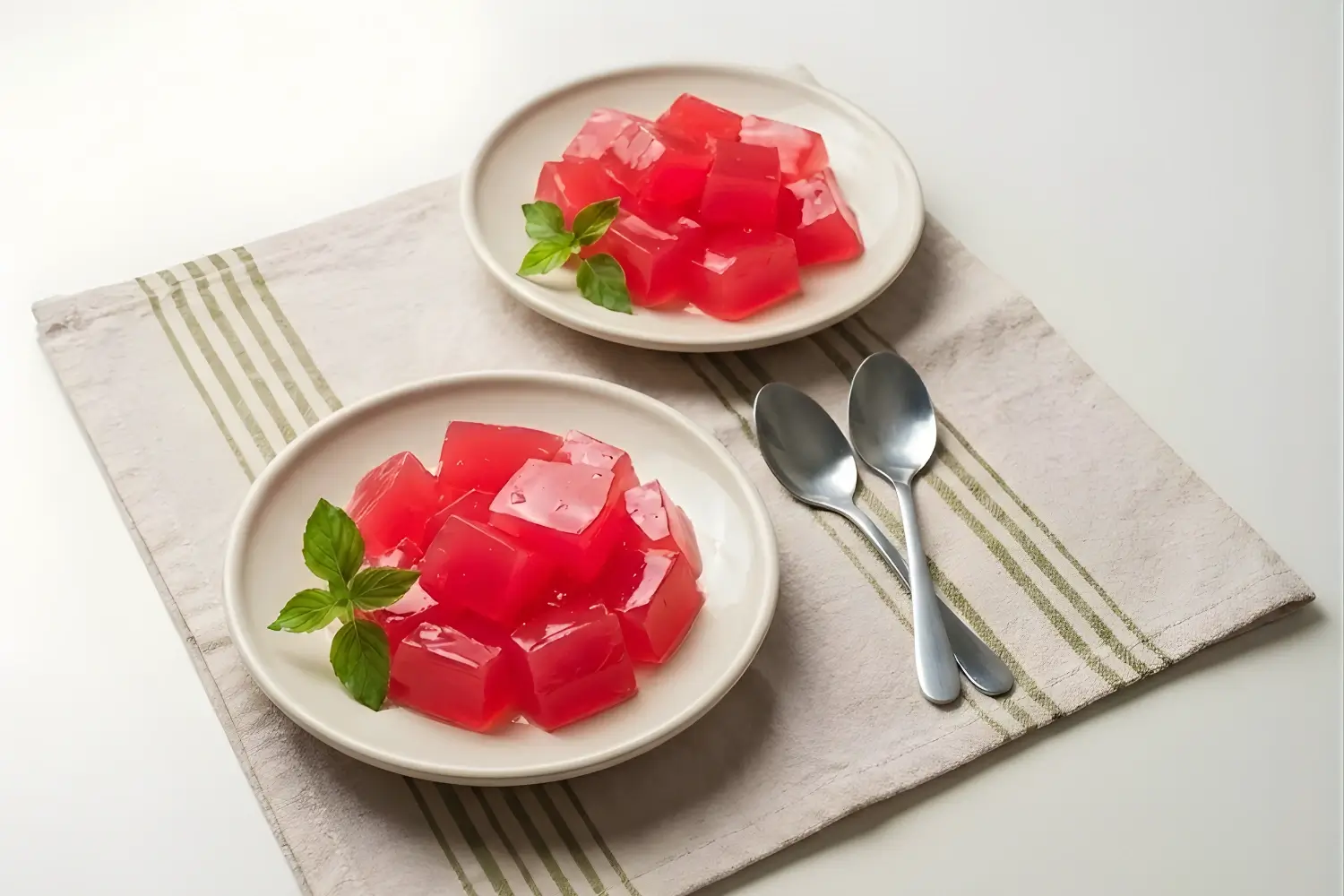
For those impressive “raindrop cakes” or clear floral jellies, clarity is king. The trick here is the filtration and the removal of air bubbles. When mixing your gelatin trick recipe, stir gently rather than whisking. Whisking introduces oxygen, which creates a cloudy appearance. If bubbles do form on the surface, a quick pass with a culinary torch or a fine-mesh skimmer will leave you with a surface as clear as a mountain lake.
Acidity and Enzyme Interference
Did you know that certain fruits can “kill” your gelatin? Raw pineapple, kiwi, papaya, and ginger contain enzymes called proteases that break down protein. If you try to make a jelly with these raw fruits, it will never set; it will remain a soup. The secret trick? Briefly cook these fruits to denature the enzymes before adding them to your gelatin base.
Creative Applications of the Gelatin Trick Recipe
Once you have mastered the technical side, the fun begins. The gelatin trick recipe can be adapted for a wide variety of impressive treats that go far beyond basic Jello.
Mirror Glazes for Cakes
The mirror glaze is perhaps the most visually stunning use of gelatin. By combining gelatin with sugar, water, condensed milk, and chocolate, you create a pourable coating that dries to a high-gloss finish. The trick to a perfect mirror glaze is the pouring temperature—usually around 32°C. This ensures the glaze is thick enough to cling to the cake but fluid enough to run off smoothly, leaving a flawless, reflective surface.
Stabilized Whipped Cream and Mousses
Have you ever made a beautiful cake, only for the whipped cream to wilt and weep an hour later? The gelatin trick recipe is the solution. Adding a small amount of bloomed and melted gelatin to your heavy cream allows it to hold its peaks for days. This is essential for layered cakes or desserts that need to sit out at room temperature during a party.
Homemade Gourmet Gummies
Forget the store-bought versions. By using a concentrated gelatin trick recipe with fruit purees and a touch of citric acid, you can create gourmet gummies with a superior “bite.” The secret here is the curing time. Letting the gummies sit uncovered in a cool, dry place for 24 hours allows some moisture to evaporate, resulting in a chewier, more professional texture.
Troubleshooting Common Gelatin Hurdles
Even with the best intentions, things can sometimes go sideways. If your treat hasn’t set after several hours in the fridge, don’t panic. You can often save it by gently re-warming the mixture and adding a bit more bloomed gelatin.
If your jelly is too tough or rubbery, you likely used too much gelatin for the volume of liquid. The standard ratio for a “spoonable” dessert is roughly one envelope (7 grams) of gelatin to two cups of liquid. For a “molded” dessert that needs to stand on its own, you might increase this slightly, but balance is key.
Another secret involves the sugar content. High concentrations of sugar can actually strengthen the gel, while high concentrations of alcohol can weaken it. If you are making “adult” gelatin treats, you’ll need to slightly increase the gelatin ratio to compensate for the booze.
Elevating Your Presentation
The final part of the gelatin trick recipe is the reveal. Unmolding a gelatin dessert can be nerve-wracking. To ensure a clean break, briefly dip the bottom of your mold into warm water for 5 to 10 seconds. This melts a microscopic layer of the gelatin, allowing the treat to slide out smoothly. For an even more professional touch, lightly oil your molds with a neutral spray before pouring the liquid in.
By understanding these “secrets”—from the chemistry of the bloom to the physics of the pour—you can turn a simple pantry staple into the star of your next gathering. The gelatin trick recipe isn’t just about making food go firm; it’s about controlling texture, light, and flavor to create something truly memorable.