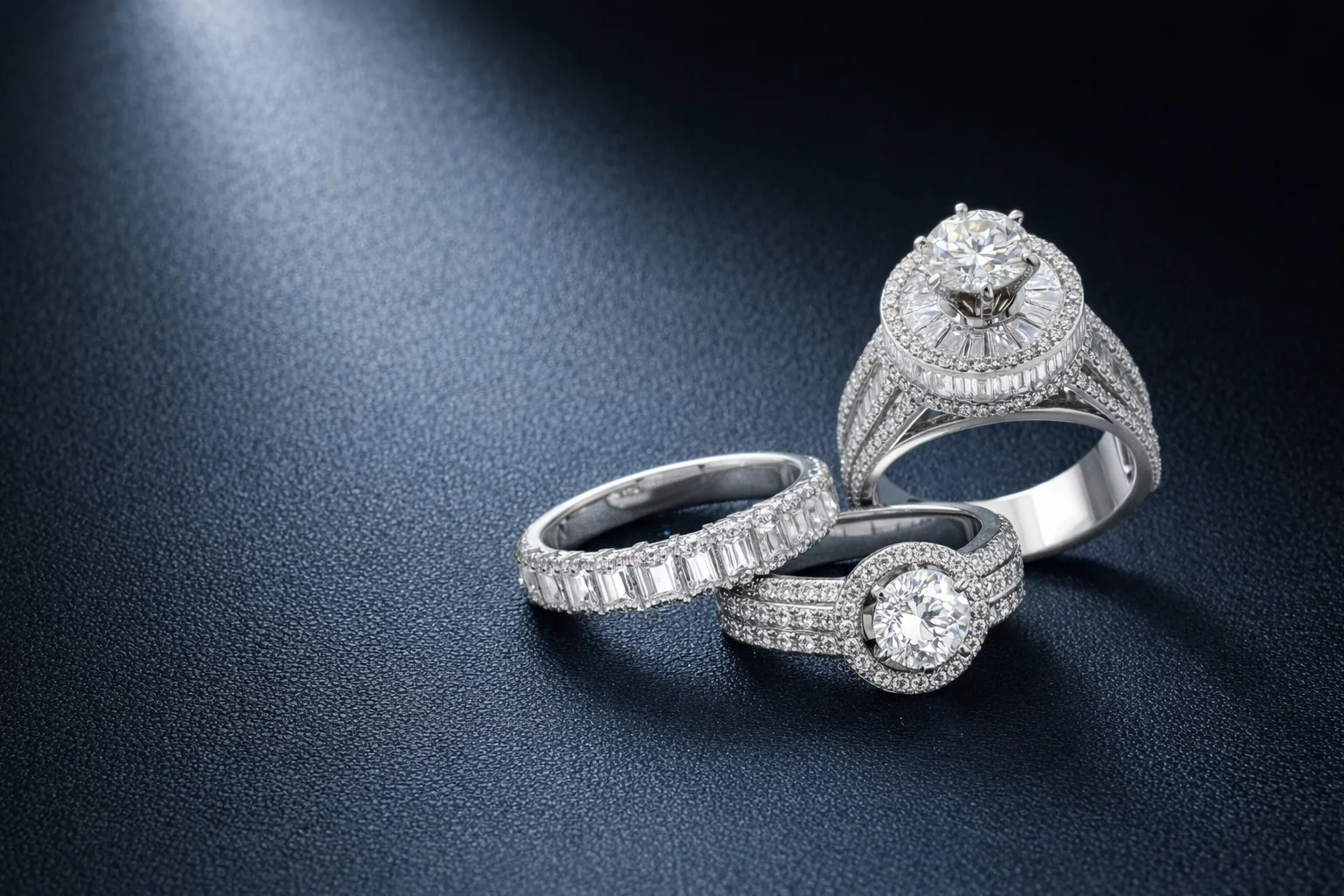
An oval solitaire is easy to recognise from above, but the shank can change how long your eye stays on the centre. A plain band lets you see the shape first. A pavé band gives the light somewhere else to go as the hand turns. Try both with the same stone size if you can. A difference in band width can be as noticeable as the addition of small diamonds.
Part of finding an oval solitaire that suits your style is deciding how much detail you want around the oval. Consider the ring from reading distance and across a room. The shoulders may seem almost plain at one distance and quite bright at another.
See what a plain band does for the oval
A plain band gives a clear edge and a continuous stretch of metal on either side of the setting. Narrow shoulders can make the oval look more prominent, while a wider band gives it a firmer base. Compare two widths in the same finish. A curved polished surface can catch enough light to add interest without any set stones.
Try a band that tapers towards the head and one that stays almost the same width. A taper can extend the visual line towards the centre. A consistent width can make the whole ring look more even across the finger. Ask how wide the band is at the base, where it may feel quite different from how it appears near the stone.
Look at the way pavé meets the centre
Pavé places small stones close together along the band. A fine row can add a narrow line of brightness without changing the basic oval silhouette. Wider shoulders or multiple rows can give the outer part of the ring more presence. Check how much of the band is set and where the row comes to an end on the finger.
Ask to look closely where the row meets the head. There should be a deliberate transition into the setting rather than an awkward gap. Some designs taper the size of the small stones, while others use an even line. Decide which you prefer when you turn the ring sideways. The top view may hide much of the work around the shoulders.
Consider wear and the wedding band
Check how the engagement ring sits next to a plain wedding band and, if you are interested, a set band. Two rows of stones can give plenty of light together. A plain companion may make it easier to see where the engagement ring begins. Ask whether the bands rub where the small stones or metal beads sit.
A plain shank and a pavé shank may offer different options for resizing. The extent of the set area is important, especially if it wraps far around the band. Ask who would inspect the small stones and how a replacement would be matched. A design you enjoy looking at should also be one you are comfortable keeping in good order.
Final Thought
Try the two bands with an oval you already like. Decide if your attention should stay mostly at the centre or travel towards the sides. Then check how the rings feel and what future service would involve before settling on the version you will wear.