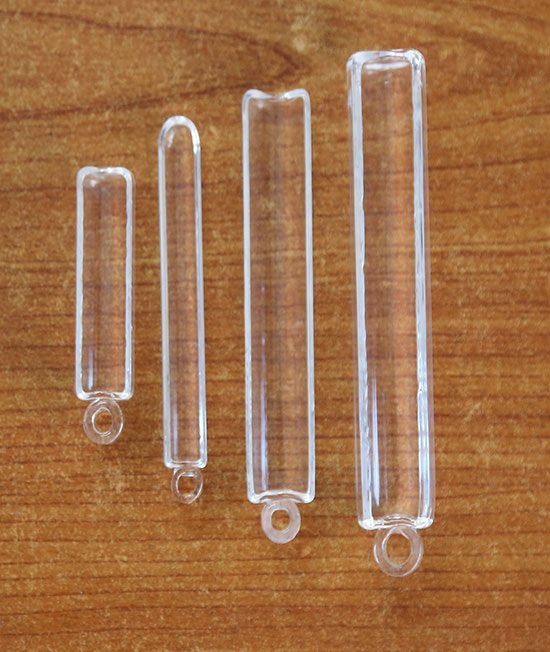
In the fast-paced world of semiconductor manufacturing, solar cell production, and advanced laboratory research, the choice of materials can make the difference between a breakthrough product and a costly failure. Among the various high-purity materials utilized in these industries, quartz stands out as an irreplaceable cornerstone. At the heart of many high-temperature thermal processes lies a specialized piece of equipment: the quartz boat. Designed to withstand extreme heat while maintaining structural integrity and chemical purity, quartz boats play an essential role in modern technology.
What is a Quartz Boat?
A quartz boat is a specialized, boat-shaped container or carrier fabricated from high-purity fused quartz (silicon dioxide). These vessels are engineered to hold, transport, and support delicate substrates—such as silicon wafers, glass plates, or ceramic components—during high-temperature processing steps. Because manufacturing environments often reach extreme temperatures exceeding 1000 degrees Celsius, standard containers like metals or low-grade plastics would melt, deform, or leach unwanted impurities into the process chamber.
Fused quartz is selected for these applications because it possesses exceptional thermal shock resistance, an extremely low coefficient of thermal expansion, and outstanding optical and chemical properties. A quartz boat acts as a secure cradle, ensuring that wafers or materials remain properly spaced and aligned as they undergo intense treatments like diffusion, oxidation, and annealing.
Key Properties of Quartz That Make It Ideal
The efficacy of a quartz boat stems directly from the unique material properties of high-purity fused quartz. Understanding these characteristics helps explain why engineers and scientists rely so heavily on quartzware in demanding environments.
First, quartz exhibits exceptional chemical purity. In semiconductor manufacturing, even a fraction of a part-per-million (ppm) of metallic contamination can ruin the electrical properties of a silicon wafer, leading to defective microchips. High-purity quartz typically contains extremely low levels of trace impurities such as iron, sodium, and potassium, ensuring that the components resting inside the quartz boat remain uncontaminated.
Second, quartz has a remarkably low thermal expansion coefficient. This means that when a quartz boat is rapidly heated or cooled inside a furnace, it undergoes minimal dimensional changes. This property prevents warping, cracking, or catastrophic thermal shock failure, allowing for rapid cycle times and high-throughput manufacturing.
Third, quartz maintains its mechanical strength and rigidity at elevated temperatures. While many materials soften or creep under sustained heat, quartz retains its shape, supporting heavy loads of semiconductor wafers without sagging over extended periods of operation.
Primary Applications of Quartz Boats
Quartz boats are deployed across several high-tech industries where precision, cleanliness, and heat resistance are paramount. Their versatility allows them to support various manufacturing and research workflows.
Semiconductor Wafer Fabrication
The semiconductor industry is by far the largest consumer of quartz boats. During the production of integrated circuits, silicon wafers must undergo numerous thermal processing steps. Quartz boats are extensively used in horizontal and vertical diffusion furnaces for processes such as boron or phosphorus diffusion, where dopants are driven into the silicon lattice to alter its electrical conductivity. They are also vital during thermal oxidation, where a controlled layer of silicon dioxide is grown on the wafer surface, serving as an insulator or masking layer.
Photovoltaic Solar Cell Production
With the global push toward renewable energy, the manufacturing of solar cells has scaled dramatically. Silicon solar cells require similar thermal processing to semiconductor wafers to create p-n junctions that capture sunlight and convert it into electricity. Quartz boats hold large batches of silicon substrates as they pass through high-temperature diffusion tubes, ensuring uniform doping and maximizing the efficiency of the resulting photovoltaic panels.
Optical Fiber Manufacturing
The production of high-purity glass preforms used in fiber optics relies on extreme heat and precise chemical vapor deposition techniques. Specialized quartz carriers and boats are often utilized in handling precursor materials and components during the creation of ultra-clear glass fibers that form the backbone of modern global telecommunications.
Laboratory Research and Material Science
Beyond large-scale industrial production, quartz boats are standard equipment in research and development laboratories. Material scientists use them inside tube furnaces for sintering ceramics, synthesizing new nanomaterials, calcining powders, and conducting high-temperature chemical reactions under inert atmospheres or vacuum conditions.
Design Variations and Configurations
Because different manufacturing processes have unique physical and thermal requirements, quartz boats come in a wide variety of shapes, sizes, and configurations. Customization is common to match specific furnace tube diameters and wafer dimensions.
Slot and Paddle Boats feature precision-cut slots or grooves that hold wafers vertically or at a slight angle. This design ensures maximum surface area exposure to process gases while preventing wafers from sticking together or touching during thermal expansion.
Sledge and Box Boats are enclosed or semi-enclosed rectangular carriers designed for sliding smoothly into horizontal process tubes. They offer extra mechanical protection and help direct gas flow evenly across the loaded substrates.
Powder and Combustion Boats are flat-bottomed, open troughs used primarily in analytical chemistry and material synthesis for holding loose powders, granular samples, or chemicals during heating, ignition, or combustion analysis.
Best Practices for Handling and Maintenance
Given their high cost and critical role in production, proper handling and maintenance of quartz boats are essential for maximizing their operational lifespan and preventing costly batch contaminations.
Handling with Care is the first rule of quartzware management. Technicians should always wear cleanroom-approved gloves when handling a quartz boat. Oils, salts, and moisture from bare human skin contain sodium and other contaminants that can devitrify the quartz surface at high temperatures, creating weak spots and introducing impurities.
Regular Cleaning and Etching are necessary to remove chemical residues, dopant build-up, and particulate contamination accumulated during furnace runs. Facilities typically employ specialized cleaning protocols involving high-purity acids, such as hydrofluoric or nitric acid etching, to strip away contaminated outer layers and restore the quartz to a pristine state.
Inspection for Devitrification and Stress Cracks must be performed routinely. Over time, prolonged exposure to high temperatures causes amorphous quartz to transition into a crystalline state known as devitrification, which appears as a cloudy, opaque white haze. Devitrified quartz loses its mechanical strength and thermal shock resistance. Identifying these signs early prevents sudden structural failure inside expensive production furnaces.
The Future of Quartz Technology in Advanced Manufacturing
As technological demands push toward smaller semiconductor nodes, higher-efficiency solar cells, and more complex nanomaterials, the role of high-purity quartz remains secure. Manufacturers continue to innovate by developing synthetic quartz grades with even lower trace impurity levels, as well as advanced fabrication techniques that allow for tighter tolerances and more intricate boat designs.
Ultimately, the humble quartz boat remains an unsung hero of modern high-tech manufacturing. By combining extreme purity, thermal resilience, and precise engineering, these specialized vessels enable the creation of the advanced electronic and optical systems that power our interconnected world today.