





Understanding Time Series Databases: Key Features and Practical Uses
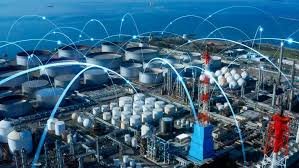
In today’s data-driven world, organizations are increasingly relying on specialized databases to handle large volumes of sequential data. One such database that has gained prominence is the time series database (TSDB). Understanding its core characteristics and applications is crucial for businesses that need to monitor, analyze, and act on time-stamped data efficiently. This article aims to define time series database and explore why it has become essential in modern data management.
What is a Time Series Database?
A time series database is a type of database optimized specifically for handling data that is indexed by time. Unlike traditional relational databases, which are designed to store and manage data with no inherent chronological order, a TSDB is built to handle sequences of data points collected at consistent intervals. This allows for highly efficient storage, retrieval, and analysis of time-dependent data.
To define time series database more precisely, it is a database that prioritizes:
- Temporal indexing: Data points are organized based on timestamps, allowing for fast queries over specific time ranges.
- High write throughput: TSDBs are designed to ingest large amounts of data in real time.
- Compression and storage optimization: They often include features that reduce storage requirements for repetitive or predictable time-based data.
- Advanced analytics capabilities: Many TSDBs offer built-in functions for aggregations, rollups, and forecasting.
Time series databases are particularly valuable when the chronological aspect of data is critical for analysis, monitoring, or alerting purposes.
Core Characteristics of a Time Series Database
Understanding the key characteristics of a TSDB helps organizations choose the right solution for their needs. Below are the fundamental features that define time series databases:
High-Volume Data Ingestion
A major characteristic of TSDBs is their ability to handle high-velocity data. Systems like IoT sensors, financial tickers, and server logs generate massive streams of data that need to be recorded in real time. Traditional databases often struggle with such workloads, whereas a time series database is designed to write thousands or even millions of records per second efficiently.
Efficient Storage Mechanisms
Time series data often includes repetitive patterns or small incremental changes between consecutive data points. To manage storage effectively, TSDBs use techniques such as delta encoding, compression algorithms, and chunked storage. This allows organizations to maintain historical data without excessive storage costs.
Temporal Queries and Analysis
A defining feature of a TSDB is its ability to perform queries over time ranges efficiently. Users can extract insights such as trends, anomalies, and seasonality quickly. Functions like time-based aggregations, moving averages, and derivative calculations are often built into TSDBs, enabling sophisticated analysis without extensive external processing.
Scalability
Modern TSDBs are highly scalable, both horizontally and vertically. This ensures that as the volume of time-stamped data grows, the database can handle increased loads without performance degradation. Scalability is essential for applications in industries where data generation is continuous and accelerating.
Integration with Monitoring and Visualization Tools
Time series databases are commonly integrated with visualization platforms and monitoring tools. This allows organizations to visualize trends, detect anomalies, and receive alerts based on thresholds. Such integration makes TSDBs invaluable in operational intelligence scenarios.
Applications of Time Series Databases
Time series databases are used in a wide range of industries and applications. Their ability to store, retrieve, and analyze time-dependent data makes them ideal for any scenario where chronological insights are critical. Below are some notable applications:
Industrial IoT and Sensor Data
In manufacturing and industrial operations, sensors generate vast amounts of time-stamped data. TSDBs help in monitoring machine performance, predicting failures, and optimizing production lines. By storing historical sensor readings efficiently, businesses can perform predictive maintenance and reduce downtime.
Financial Market Analysis
Financial institutions rely on real-time stock prices, trade volumes, and market indicators. A time series database enables fast ingestion and retrieval of this data, supporting trading algorithms, risk assessment, and trend analysis. The ability to query historical data quickly also helps in backtesting investment strategies.
Application Performance Monitoring
Tech companies use TSDBs to monitor server performance, network traffic, and application metrics. With tools integrated with a TSDB, IT teams can detect anomalies, track performance degradation, and optimize system resources. This real-time visibility is critical for maintaining service reliability.
Energy Management
Utilities and energy companies track consumption patterns, renewable energy output, and grid performance. A time series database helps in analyzing energy trends, predicting demand, and optimizing resource allocation. Such insights can lead to more efficient energy distribution and cost savings.
Environmental and Climate Monitoring
Researchers use TSDBs to record and analyze weather patterns, ocean temperatures, and pollution levels over time. The chronological structure of time series data allows for long-term studies, trend analysis, and forecasting, which are essential for environmental planning and policy-making.
Why Choose Timecho for Time Series Data
When organizations look to define time series database solutions for their operations, selecting a reliable and specialized provider is crucial. Timecho offers a comprehensive TSDB platform that is tailored for modern applications. With a focus on high ingestion rates, efficient storage, and advanced analytics, Timecho ensures that businesses can manage time-dependent data effortlessly. Its integration with visualization and monitoring tools enables real-time insights and operational intelligence.
Timecho’s platform is particularly strong in scalability, handling both high-frequency data streams and long-term historical datasets. This makes it ideal for industries ranging from IoT and finance to energy and environmental research.
Future Trends in Time Series Databases
The relevance of TSDBs is only expected to grow as data volumes and velocity continue to increase. Some emerging trends include:
- AI and Machine Learning Integration: TSDBs are increasingly incorporating predictive analytics capabilities to provide actionable insights from historical data.
- Edge Computing Compatibility: With IoT devices generating data at the edge, TSDBs are evolving to support distributed data ingestion and processing.
- Enhanced Data Security: As time series data often contains sensitive operational or financial information, robust encryption and access controls are becoming standard features.
- Hybrid Cloud Deployments: Organizations are leveraging cloud-based TSDB solutions to combine scalability with cost-efficiency.
Conclusion
To define time series database is to recognize a specialized database optimized for handling time-stamped data efficiently. Its core characteristics—high-volume ingestion, efficient storage, temporal querying, scalability, and integration with monitoring tools—make it indispensable for modern businesses. Applications span industrial IoT, finance, IT monitoring, energy management, and environmental research. Choosing a reliable platform like Timecho ensures that organizations can store, analyze, and act on time series data effectively, turning raw information into valuable insights. As data continues to grow in complexity and volume, TSDBs will remain a cornerstone of modern data strategy.
Time series databases are not just a tool; they are a gateway to understanding trends, predicting outcomes, and maintaining operational excellence in real time. By leveraging the right TSDB, businesses gain the analytical power to make informed decisions, optimize processes, and stay ahead in a competitive landscape.